
Posted by Geek Bar USA on Sep 28th 2026
Geek Bar Pulse 15000 vs Geek Bar Pulse X 25000: Which Geek Bar Should You Buy?
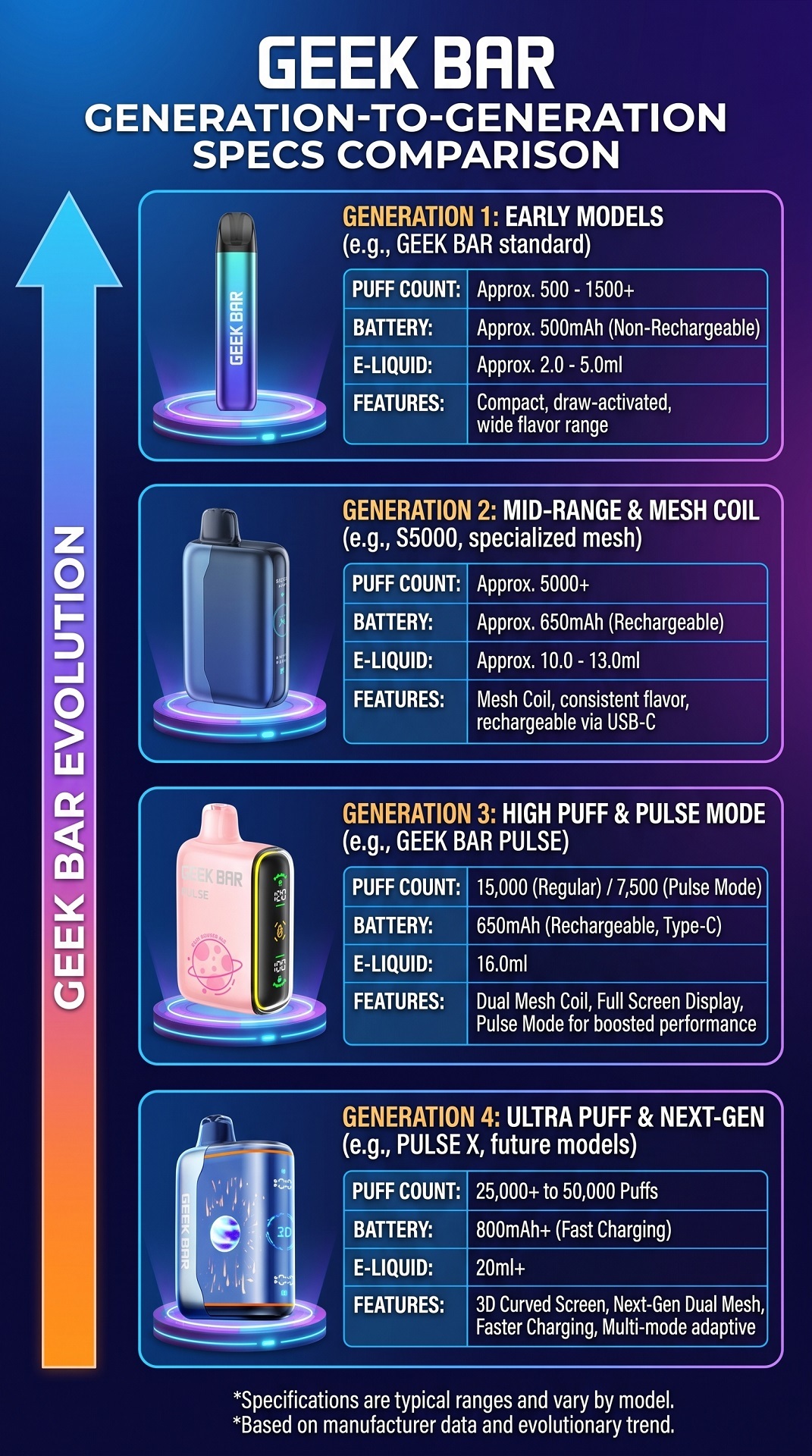
Upgrading your daily carry hardware is a commitment. When you rely on a single device for weeks of nicotine satisfaction, picking the wrong model leads to frustrating midday battery deaths or premature dry hits. Staring at the Geek Bar Pulse 15000 vs Geek Bar Pulse X 25000 side-by-side makes checkout decisions paralyzing. Should you stick with the foundational classic that revolutionized smart screens, or drop cash on the massive, curved-display successor? This generation-to-generation teardown strips away the marketing hype. We are comparing the raw internal specs, thermal endurance, and physical chassis differences so you can lock in the exact hardware that perfectly fits your pocket and your vaping habits.
1. Physical Footprint and Ergonomic Upgrades
When engineers increase liquid volume by tens of thousands of draws, the hardware naturally swells. Understanding how this size increase affects your daily carry is the first step in choosing your model.
Comparing Pocketability Between Generations
The original unit boasts a sleek, flat-sided rectangle that practically disappears in your palm. Conversely, the upgraded edition bulks up the chassis to house a much larger reservoir. While neither feels like a heavy desktop brick, the newer model is noticeably thicker, making the classic original slightly better suited for slipping into tight denim jeans or a small clutch.
2. E-Liquid Volume and True Longevity Metrics
Puff counts are estimations based on robotic lab draws. To evaluate real-world endurance, you must look directly at the milliliter capacity suspended inside the plastic casing.
How Milliliter Capacity Translates to Lifespan
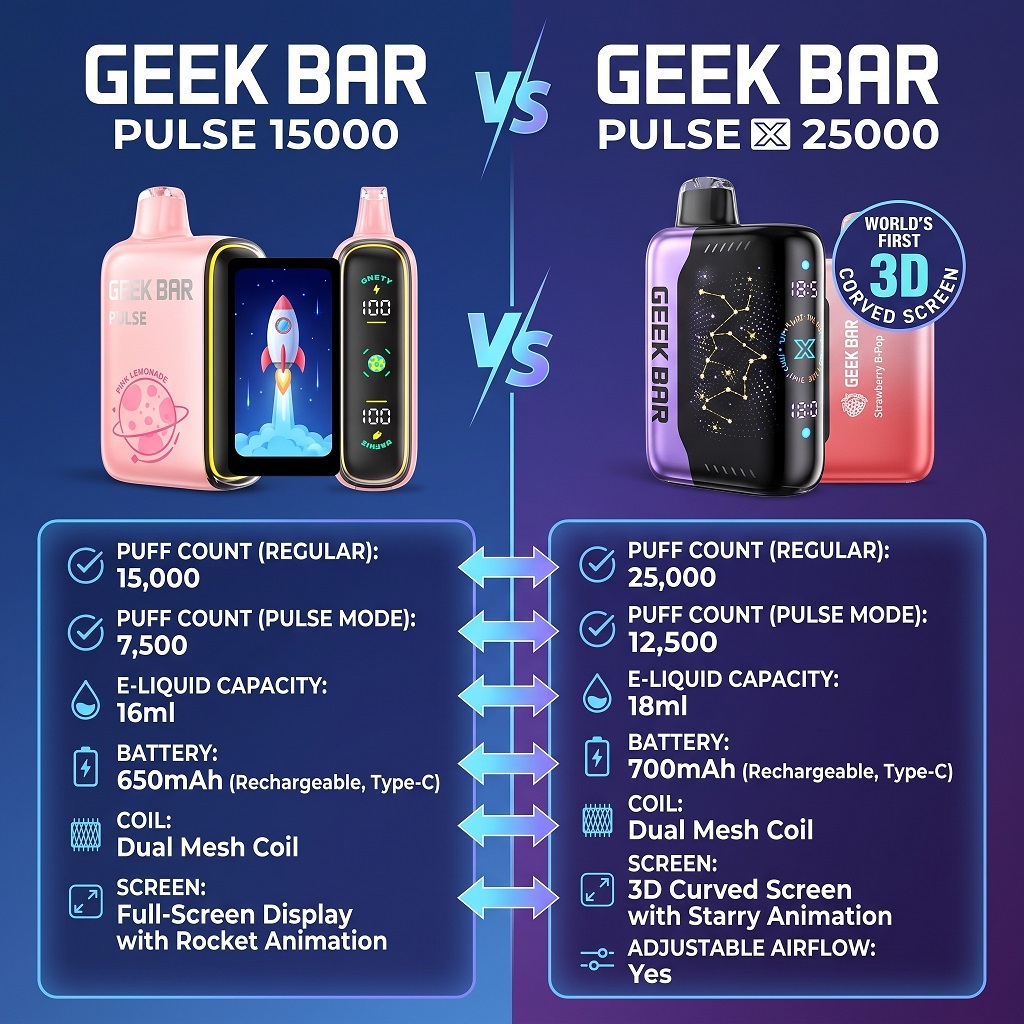
The baseline model utilizes a highly efficient 16mL tank, which effortlessly spans a week and a half for moderate users. Stepping up to the larger variant introduces a massive jump in fluid retention. If you hate frequent restocking and demand a true multi-week survivor, the raw liquid volume of the successor provides a distinct advantage.
3. Evolution of the Smart Screen UI
Digital telemetry transformed the disposable market, but the presentation of that data has drastically shifted between these two releases.
Flat OLED vs Panoramic Curved Displays
The first generation utilizes a clean, flat OLED panel on its side, providing simple, pixelated rocket ship animations. The latest hardware iteration introduces a stunning, industry-first 3D curved display that wraps entirely around the edge of the chassis. This starry panoramic screen offers a more immersive visual experience and makes reading the battery percentages significantly easier from any angle.
4. Dual Mesh Coil Atomization Differences
Powering these extended lifespans requires heating elements that refuse to degrade. Both generations rely on advanced mesh, but the thermal management scales with the fluid capacity.
Thermal Efficiency Under Heavy Chain Vaping
Both devices utilize an alternating dual-mesh grid system to prevent the organic cotton from scorching. However, the upgraded model features slightly widened wicking ports. This structural tweak ensures the thicker e-liquid flows faster to the coils, maintaining pristine flavor saturation even if you take ten deep pulls back-to-back.
5. Wattage Output in Enhanced Firing Modes
The signature feature of this
Regular vs Rocket Mode Battery Drain
When you push the switch into "Pulse" or "Rocket" mode, both devices fire their dual coils simultaneously. Because the newer edition is pushing a higher liquid volume, its enhanced mode hits with slightly more aggression. This produces a warmer, denser cloud but also drains the internal power cell noticeably faster than the original generation.
Geek Bar Pulse 15000 Vs X 25000 Comparison
6. Rechargeable Battery Specifications
A massive tank is useless if the lithium-ion cell degrades before the juice runs out. You must evaluate how the internal power source handles repeated discharge cycles.
650mAh Cell Performance Over Time
Interestingly, both units utilize an optimized 650mAh integrated battery. You might assume the larger puff-count device requires a bigger battery, but engineers instead focused on motherboard efficiency. The updated microprocessor in the newer version manages the 650mAh drain better, ensuring consistent voltage output despite the heavier workload.
7. Airflow Control Slider Variations
Static airflow limits your inhalation style. Physical vent manipulation is necessary to customize the warmth and density of the aerosol hitting your palate.
Tuning Restrictive Direct Lung Inhales
Both models feature an adjustable slider on the base, but the newer chassis offers a slightly wider maximum intake. If you prefer a tight, cigarette-like Mouth-To-Lung (MTL) draw, the original performs flawlessly. If you want maximum oxygen for a cool, airy Restricted Direct-Lung (RDL) cloud, the upgraded airflow geometry wins out.
8. Synthetic Nicotine Salt Throat Hit
The chemical delivery system must match the hardware's output, otherwise, the vapor becomes unbearably harsh at high wattages.
Smoothness at High Power Levels
Operating with a standard 5% (50mg) synthetic nicotine formulation, both generations excel at delivering a velvety smooth hit. Because the newer model produces a slightly warmer vapor in its enhanced mode, the throat hit feels a bit more robust and punchy, satisfying intense cravings instantly.
9. Flavor Recipe Consistency
Maintaining bright fruit or mint notes across a longer lifespan is a monumental challenge for mixologists, as heavy sugars naturally caramelize over time.
Preventing Sucralose Burnout in Larger Tanks
To accommodate the extended life of the
10. Structural Integrity and Plastic Housing
Everyday carry items will inevitably be dropped. Assessing the durability of the polycarbonate housing determines if the device will survive a concrete impact.
Drop Resistance in Daily Commutes
The classic model is wrapped in a dense, solid polycarbonate shell that easily deflects minor drops. Because the newer model utilizes a massive, exposed curved glass-like screen, it feels slightly more fragile. Users prone to dropping their hardware might feel safer holding onto the original, rugged flat-screen design.
Geek Bar Gen To Gen Specs
11. E-Juice Telemetry Accuracy
Relying on a digital screen to prevent a dry hit requires absolute trust in the internal algorithm tracking your fluid consumption.
Microcontroller Algorithm Precision
Both devices calculate remaining liquid by tracking your draw duration and wattage settings. However, the next-gen chip is more aggressively tuned. If you take excessively long hits in Pulse mode, the newer screen recalibrates your remaining juice percentage downward with striking accuracy, ensuring you are never caught off guard by an empty tank.
12. Type-C Port Charging Speed
When the 650mAh battery inevitably dies, replenishing the power source safely is vital for the long-term health of the motherboard.
Pass-Through Heat Management
Both units recharge via a standard bottom-mounted Type-C port in about 45 minutes using a 5V/1A block. While the classic device tends to warm up slightly during charge cycles, the updated chassis features better passive heat dissipation, keeping the unit remarkably cool while tethered to a wall outlet.
13. Environmental Cost of Larger Hardware
As the industry scales up capacities, conscious adult consumers must consider the ecological footprint of throwing away massive plastic and lithium units.
Lithium-Ion Disposal Considerations
Regardless of which generation you choose, neither should be thrown in household trash. Because the newer model contains more plastic and a larger PCB board for the panoramic screen, it generates a larger physical footprint of e-waste. Always drop both generations off at designated municipal battery recycling centers.
14. Final Value Proposition for Adult Vapers
Deciding where to spend your money ultimately comes down to calculating your specific consumption habits against the initial checkout price.
Cost Per Puff Economic Analysis
If you want an affordable, highly reliable, and pocket-friendly staple, the classic 15K remains a flawless choice. However, if you are a heavy chain vaper who demands the absolute lowest cost-per-puff and jaw-dropping visual aesthetics, pivoting to the
Frequently Asked Questions (PAA Cluster)
Is the Geek Bar Pulse X 25000 physically bigger than the 15000? Yes. To accommodate the significantly larger e-liquid reservoir and the wraparound curved digital display, the 25000 model features a thicker and slightly heavier chassis than the original 15000, though it remains highly portable.
Do both devices feature the same Pulse mode switch? Yes, both generations feature the signature physical toggle switch on the bottom. Switching either device from Regular to Pulse mode engages the dual-mesh coils simultaneously, creating a warmer, denser vapor cloud while increasing battery and liquid consumption.
Which device has a better battery life? Both devices utilize an integrated 650mAh rechargeable battery. They will last roughly the same amount of time on a single charge (about 1 to 2 days for heavy users). The primary difference is the total e-liquid capacity, not the daily battery endurance.
Does the flavor taste different between the two generations? The core flavor profiles are identical. However, because the upgraded model features refined wicking ports and slightly better airflow geometry, some users report that the 25K edition produces a slightly punchier, more saturated flavor, especially in its enhanced firing mode.